The Journey: From Inside Out
Midad is an artistic developmental residency that works on the practitioner: on how you see, how you feel, and how you turn that into work. The space and the materials are tools in this journey; the journey itself is the point.
Where the inner and outer worlds meet
Authentic expression emerges where two environments meet: the inner environment, with its values, memories, pain, beliefs, culture, and personal experiences; and the outer environment, with its places, materials, people, details, and questions.
When practitioners learn to observe the outer world with awareness while listening to what moves within, this meeting becomes a continuous source of expression. Their midad begins in the relationship between what they see, what they feel, and what they choose to make.
Midad is the inner source that finds its way outward through colour, charcoal, thread, paper, movement, sound, writing, or any medium that feels most truthful to the practitioner.
The meaning of the name
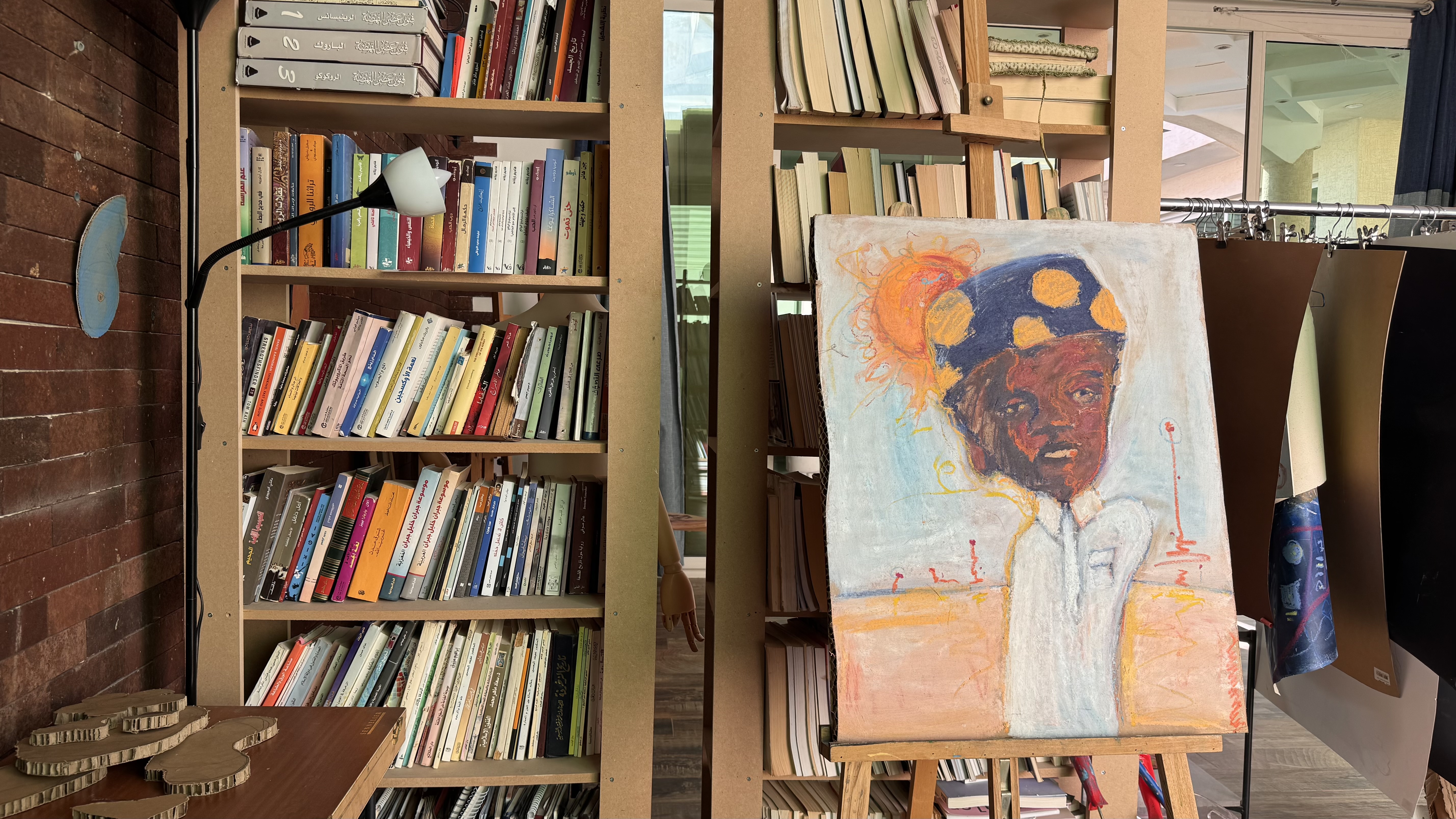
In Arabic, midad is what supplies the pen with the substance of writing; its root carries the meanings of extension, support, and increase. Midad begins here: every practitioner carries an inner source that nourishes their expression. The journey helps them discover that source, then find the language and material capable of giving it form in the world.
How We Learn and Work
Group Workshops
Spaces for reflection, dialogue, shared experience, and exercises connected to the five stages of the journey.
Individual Follow-up
One-to-one sessions helping each practitioner connect the inner-development work to their project, review their progress, and identify the next step.
Studio Practice
Dedicated time for production and experimentation within a community of practitioners developing their own work.
Field Trips
Experiences outside the studio that expand observation and renew the relationship with place, environment, and material.
Sharing and Critique
Regular opportunities to share work in progress and receive questions and feedback that support its development without imposing a single outcome.
Fixed days and activities
Days and activities attended by everyone in the cycle.
Saturday breakfast
Every Saturday from 11 to 3: we cook together, talk, and arrange the week's studio hours. Tell us if you are bringing guests.
Writing clinic
We write, and put our portfolios and artistic texts in order.
Publishing day
The day we publish our monthly content.
Open studio day
We show our work and welcome guests from the art scene.
Recurring Days and Activities
These activities recur throughout the cycle.
Saturday Breakfast
A weekly gathering to share updates and coordinate studio attendance for the week ahead.
Publishing Day
A recurring day for practitioners to document what they are making and share it with the studio community.
Writing Clinic
Focused sessions for shaping artist statements, portfolio and project texts, and applications for grants and residencies.
Open Studio
At the end of each month, practitioners share work in progress with invited curators, collectors, and fellow practitioners. It is not a polished exhibition, but an honest encounter with work as it takes shape.
Final Exhibition
The cycle's final milestone, presenting work developed during the journey to a wider audience within the art community.
Why a Cycle, and How Do the Hours Work?
Artistic practice needs rhythm, and the environment in which we work shapes what we make. A small, committed cycle gives each practitioner shared momentum, greater consistency, and a natural space for exchange and accountability.
Curated selection
Applications are reviewed to build a small group with meaningful creative compatibility and a healthy diversity of practices.
Shared rhythm
The group works within a similar rhythm, allowing collective momentum to support what can otherwise feel like an isolated process.
Natural accountability
When others know you are part of the journey, showing up and continuing the work becomes easier and more sustainable.
How do the hours work?
Each practitioner receives 16 hours per month in the shared workspace. This allocation is designed to provide organised and equitable access across the cycle. Additional packages of 32, 48, or 64 hours are available, subject to need and availability.
The booking and scheduling process is explained to participants when they join.
What Will You Leave With?
Midad does not promise a ready-made style or a single answer. It offers the time, space, tools, and guidance needed to discover your own.
By the end of the Development Track, you can expect to leave with:
- A deeper awareness of what drives your practice and a clearer understanding of your inner and outer environments.
- A stronger conceptual direction for your project and new artistic and material experiments.
- The beginning of a coherent personal artistic language.
- A project or body of work developed during the residency.
- A clearer and better-organised portfolio.
- Relationships within a community of practitioners.
- Experience sharing and speaking about your work.
- Priority to take part in the final group exhibition.
Explore further
The Development Programme
Nineteen workshops in five chapters, each by name with its full description, followed by the exhibition chapter.
Learn more →Who Midad Is For
For beginner and emerging artists, across many fields of practice.
Learn more →The People Behind It
Founders, mentors, facilitators and the Guide Hour experts.
Learn more →Previous Cycles
Past residents and collaborators, and their work.
Learn more →The Studio
The space, its hours and packages, practical details and location.
Learn more →